Gameplay
Find Your Most Valuable Card in TCG Card Shop Simulator
Use this tcg card shop simulator most expensive card guide to compare prints, foil finishes, grading costs, and market prices before selling a pull.
Updated
- Guides
- 39
- Topics
- 3
- On this page
- 6
Compare the exact variant and its current value
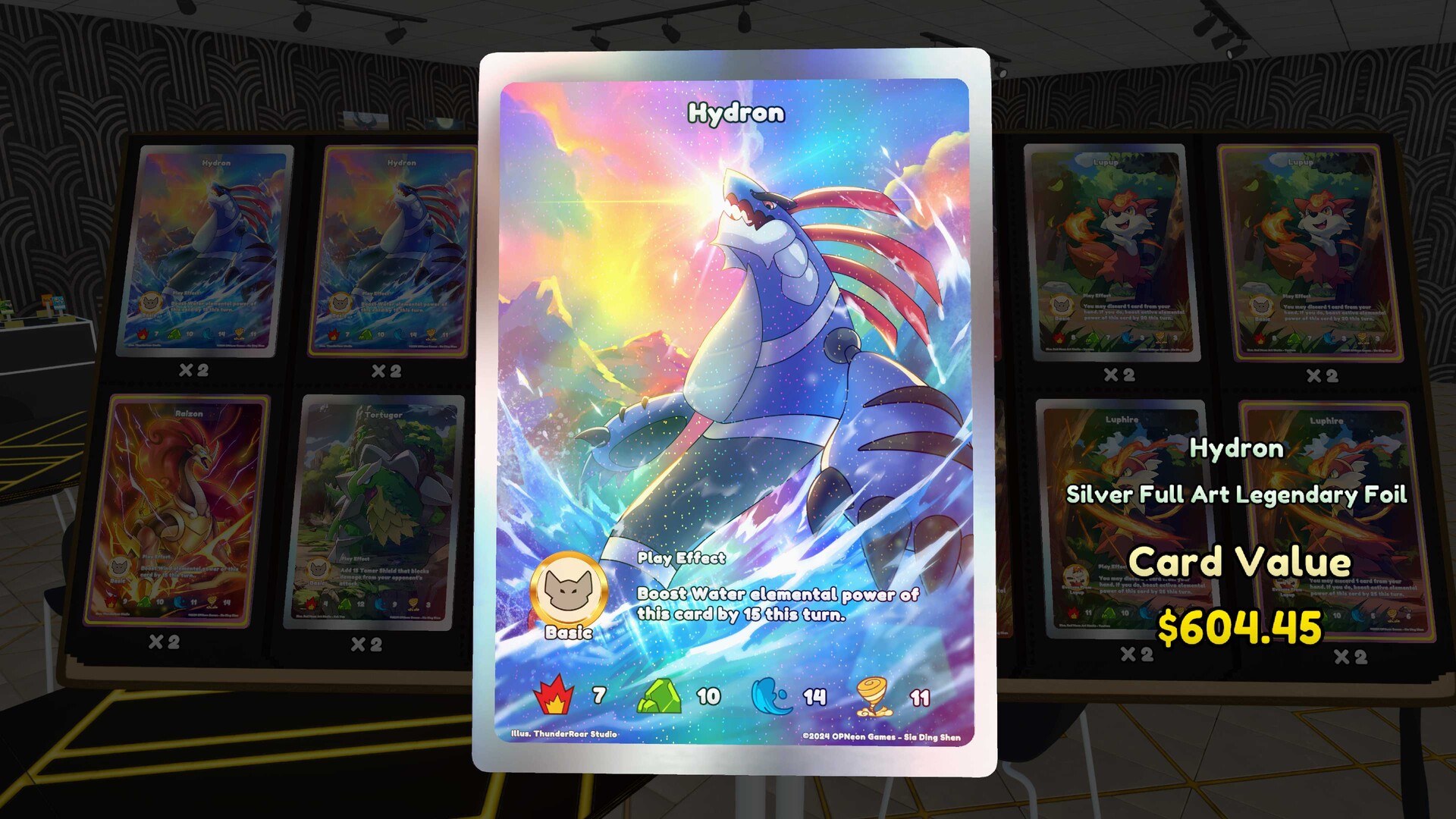
The highest-value card to look for depends on its exact print, grading, and your save's market: compare rare Ghost and Foil Ghost prints, Full Art foils, the borderless Full Art foil Ascension print, and valuable graded copies. A high displayed market value does not guarantee a sale.
Which valuable variants deserve a price check?
| Option | Details |
|---|---|
| Rare Ghost and Foil Ghost prints | High-value chase categories to inspect using the actual print and current market price. |
| Full Art foil card prints | Compare the Full Art print and Foil finish together when checking the card's value. |
| Borderless Full Art foil Ascension print | The print required for Limitless Pull belongs among the high-value chase categories. |
| Valuable graded card copies | Check the copy's grading outcome and grade-specific market price when comparing its value. |
The achievements distinguish selling a $10,000 card from selling a graded card worth more than $100,000. Those sale milestones do not identify a universally highest-priced card. Use them as goals while checking the actual value of the specific copy you own.
Read the collection, print, finish, and grade
Start by identifying the collection: Base, Destiny, Ghost, or Ascension. Then distinguish the particular print, such as EX or Full Art, and whether the finish is Normal or Foil. Keep those details together when comparing prices so you are evaluating the correct variant.
A graded copy has a grading outcome from 1–10 and a grade-specific market price. Market values can differ between save files, while event effects and the changing market can alter what customers consider a reasonable offer. Check the current price in your own save before adopting a value from someone else's collection.
Make your comparisons consistent. When deciding which pull deserves attention, write down its complete variant alongside the price you are considering. That makes it easier to revisit the decision without relying on a card name or an impressive-looking finish alone.
Check an expensive pull before selling or grading
- Identify the card's exact set so you compare it within the correct collection.
- Check its edition, print, and finish so the price comparison refers to the variant you actually pulled.
- Review your collection ownership to decide whether the pull fills a missing print you want to keep.
- Reserve the card if you need it for a deck so it does not enter your sale plans by accident.
- Check the current market price in your save to give your selling decision a relevant starting point.
- Compare the raw value with possible grade-specific values, service fees, shipping costs, and time away from inventory before choosing grading.
- Choose whether to keep, sell, or grade the card according to your collection priorities and the tradeoff you are comfortable accepting.
Include every grading cost in the decision
Compare the card's raw value with its possible grade-specific values before sending it for grading. Include the service fee, shipping cost, and time away from inventory in that comparison. A tempting displayed graded value still needs to be weighed against those costs and does not guarantee a checkout.
Decide what result would make grading worthwhile for you before committing the card. Consider how much you value keeping it available and whether you would still be comfortable with a less attractive outcome. Give a missing collection print or a card needed for your deck its own place in that decision.
Treat market value as a reference for selling
Use current market value to inform your asking price while remembering that customer judgments can change with events and the market. The displayed value of an expensive graded card is not a guaranteed completed sale. Check the exact copy and current conditions before deciding how much of your shop's plans should depend on selling it.
Set your collection priorities before listing a prized pull. If completing that print or keeping it for a deck matters more to you than the potential proceeds, reserve it. Revisit the selling decision when you are comfortable parting with the card.