Gameplay
TCG Card Shop Simulator Customer Offers and Trading
Learn tcg card shop simulator trading: inspect customer offers, compare cards and market values, protect your collection and keep cash available for stock.
Updated
- Guides
- 39
- Topics
- 3
- On this page
- 5
Inspect the customer's offer before accepting
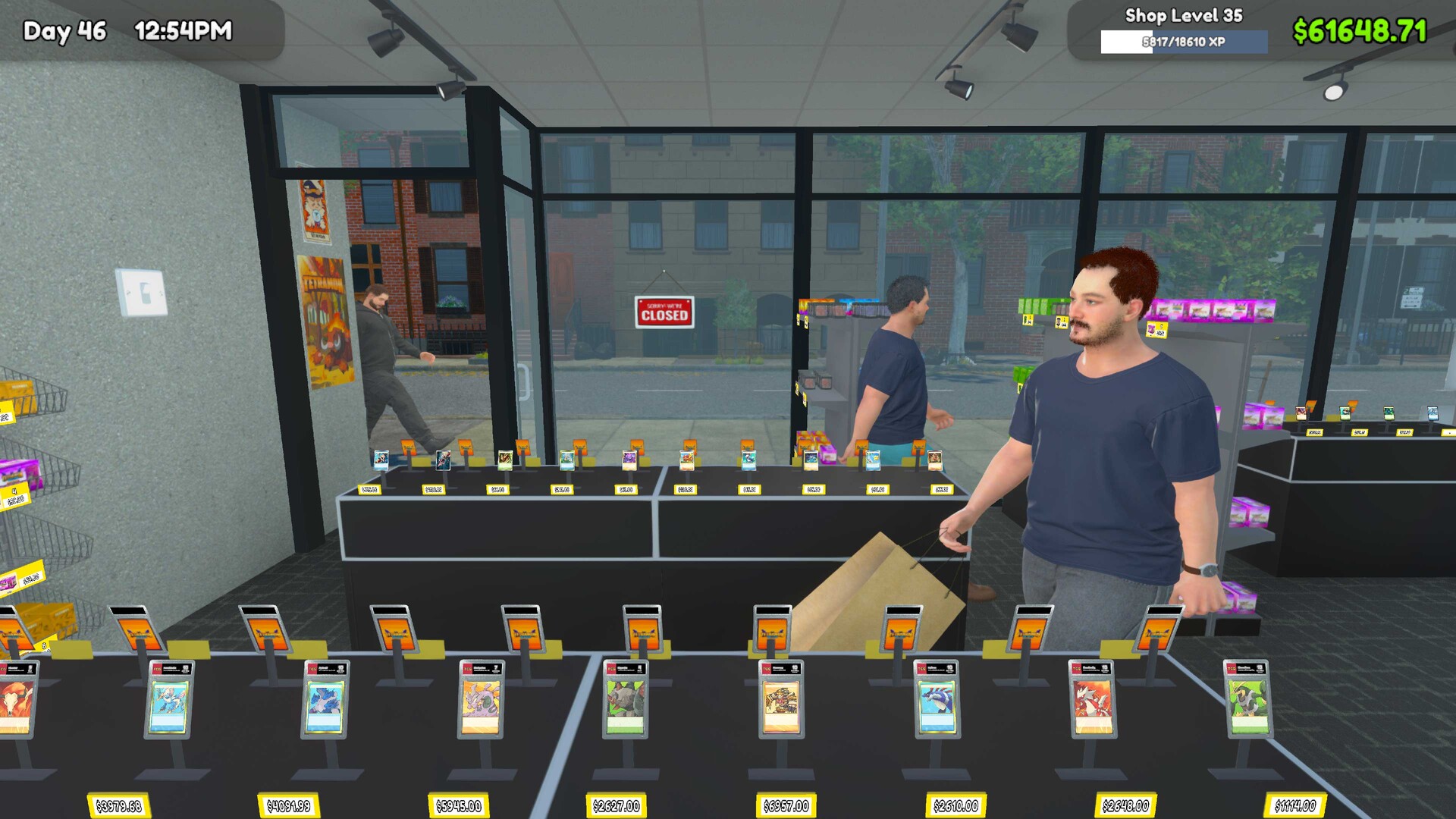
A customer near checkout can offer a card sale or trade with a visible interaction indicator, such as a red exclamation mark. Approach them to inspect the deal, then accept it only after checking the exact card and the cash or cards requested.
Customer offers are separate from listing your own singles on a Card Table. They are optional, so you can reject a deal that does not suit your shop or collection. Check that you actually have the requested cards and any required cash before confirming.
Complete a customer offer step by step
- Approach the customer showing an offer indicator near checkout to inspect their proposed sale or trade.
- Identify the exact card and print on offer so your comparison concerns the card you would actually receive.
- Read any grading or condition information shown to include those details in your decision.
- Compare the offered card with the current TCG Price reference to judge the customer's valuation.
- Inspect the requested cash or cards so you understand what you would give up in the exchange.
- Check your collection or playable deck to decide whether the offered card fills a gap worth paying for.
- Verify that the requested items and cash are available without using money you need for stock.
- Confirm the offer if it fits your budget and collection plans; otherwise, reject the deal.
Compare the exact print, value and payment
Start with the exact card and print, then read any grading or condition details the offer shows. Compare that card with the current TCG Price reference rather than judging it by a familiar name alone. Keep the requested payment in view throughout the comparison.
Assess what leaves your shop as carefully as what enters it. A valuable card on the offer screen does not automatically make the exchange profitable when you account for cash spent or collectible copies surrendered. If the customer requests cards you value, include their loss in your decision.
Decide whether your main reason for accepting is resale, collection progress or a playable-deck gap. A card you want for your collection can still be an unsuitable purchase when its asking price strains your cash. Let the purpose of the purchase guide your spending, while keeping the market comparison separate from how much you personally want the card.
Protect stock money and cards you want to keep
Keep money needed for stock out of your trading budget. Customer offers are optional, and rejecting an overpriced card is a valid choice. You can also refuse an offer that requires a card you want to keep.
Before confirming, make sure the requested item and any required cash are actually available. Consider the collection or deck gap the offered card fills alongside the copies you would lose. An appealing incoming card is only part of the exchange.
Choose a spending limit before you become attached to an offer. If you would regret losing the requested card, or if paying would disrupt your shop plans, pass on the deal. Keeping a clear reason for each purchase makes it easier to resist an attractive card that does not fit your priorities.
Recognize an opportunity without rushing the decision
Not every visiting customer presents an offer. Watch for the interaction indicator near checkout, because missing the opportunity to approach that customer can mean the deal passes. Use the indicator as your cue to inspect the proposal.
Separate noticing an offer from deciding to buy. Once you inspect it, work through the card, value, requested payment and collection need before confirming. If the exchange fails those checks, declining protects the cash and cards you already have.